The result changes with every person
Prompts are repeated, solutions are inconsistent and the team spends too much time correcting what AI should have resolved properly.
Governed AI · Software development
We integrate AI applied to software development into the way your organisation actually works, so development teams move forward according to your standards, not arbitrary answers.

When AI does not fit
Prompts are repeated, solutions are inconsistent and the team spends too much time correcting what AI should have resolved properly.
Requirements, development, testing, documentation and release stop telling the same story. Speed creates misalignment.
Initiatives remain isolated, put pressure on the stack or architecture, and struggle to turn an initial use case into a sustainable way of working.
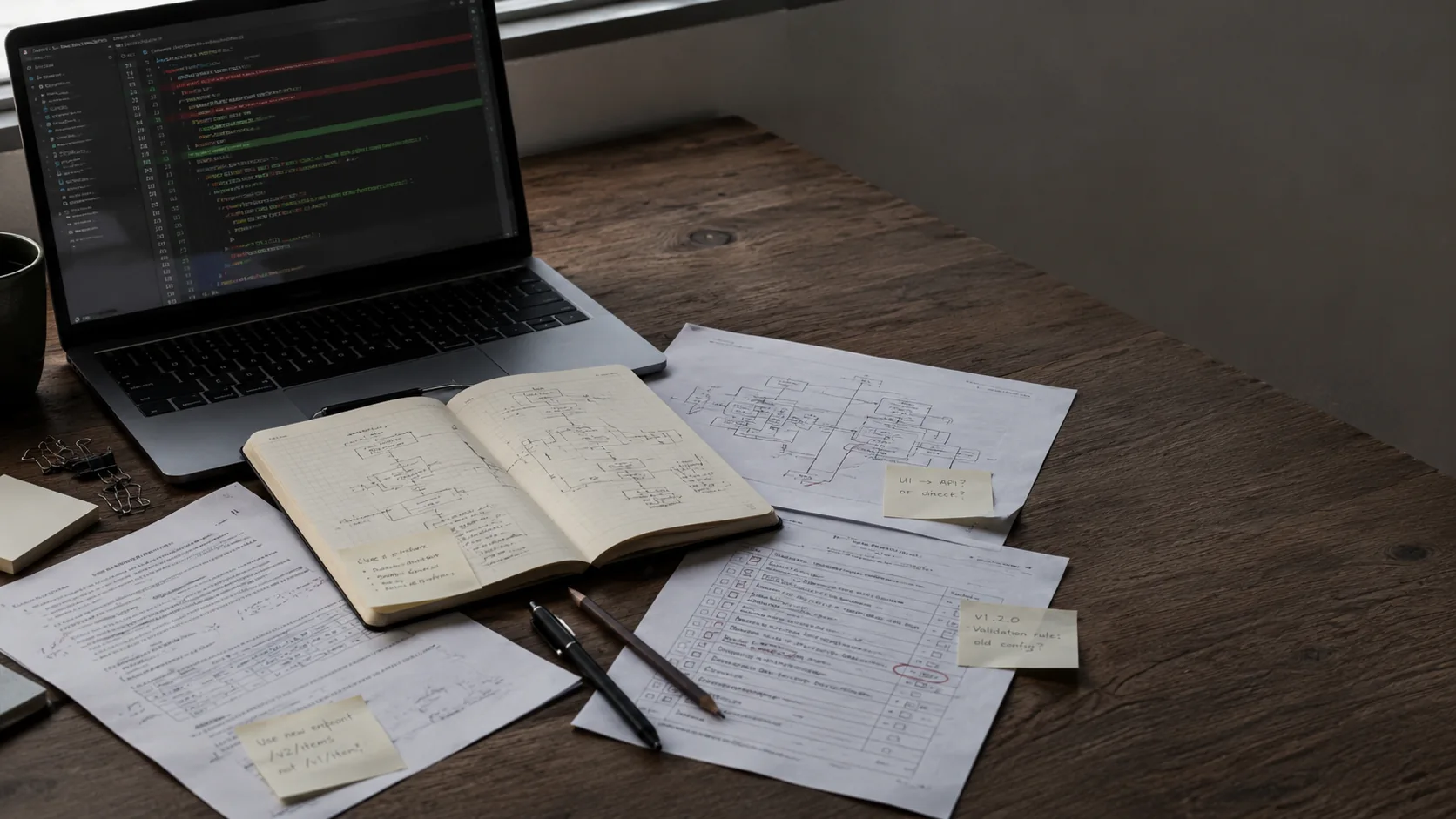
One change, everything connected
Intent, construction, validation, documentation, review and delivery move forward without losing continuity.
A complete journey
Valuable use cases, shared standards and a practical way to begin or correct scattered use.
AI adapted to real workflows, code and teams to improve a complete cycle, not an isolated demonstration.
Ongoing support, governance and evolution to extend improvement without losing quality or coherence.

Direction of the work
Technical direction and delivery
A data scientist and senior technology engineering professional with over 15 years across IT consultancy, software, data and delivery. He supports AI adoption and integration from the real context of each organisation.
Tell us where you want to improve speed, quality or coordination. You will receive an initial fit assessment within 48 hours.